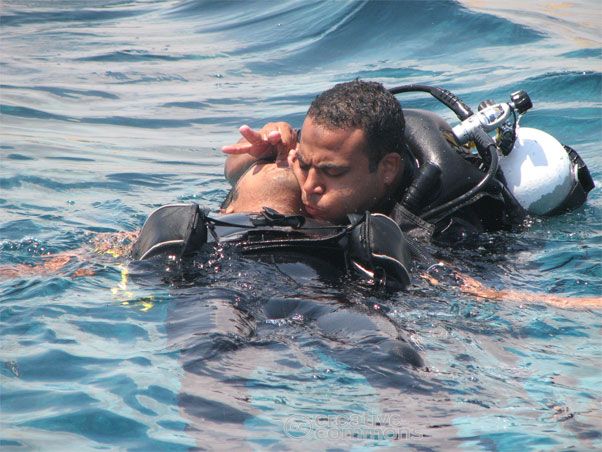
Dive Accident
Diving
is a relatively safe sport, however, there will always be potential
emergencies. Whether these emergencies evolve into a full blown
accident or
death often depends on the immediate care the victim receives.
To avoid accident with Dangerous Creature, please check out the Danger
Creatures Page
All divers
worldwide should be aware of the causes, signs, and symptoms of
potential diving
emergencies and be prepared. Ensuring your dive buddies are properly
trained in
emergencies is just as important; the victim may not always be someone
else, it
could be you!!
Emergency
Number:
+501 226 28 51
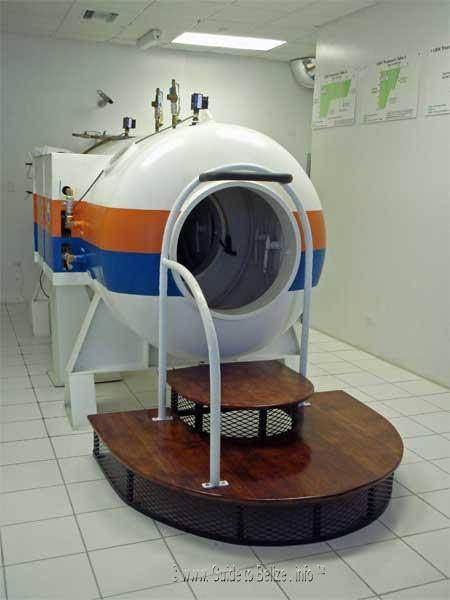
The
hyperbaric chamber is in San Pedro, on Ambergris Caye. This is the only
recompression chamber in Belize and available 24
houres daily.
When you
land at the airstrip in San
Pedro , Ambergris Caye, you
may notice an white building on the north/west side of the airstrip
behind the Maya Air Terminal.
|
 |
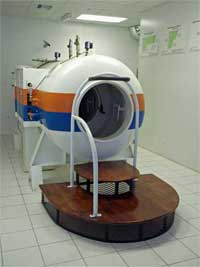
| The
building
houses a Double-Lock Recompression Chamber owned by Subaquatics of
Belize Ltd. It is the only recompression chamber in Belize. |
Dive Accident
Diving accidents are also called „decompression accident“ or
„decompression illness“ (DCI). These accidents are caused by rapid
reduction of ambient pressure and are characterized by formation of gas
bubbles in the blood and the tissues. Depending on the mechanism of
bubble formation there are two diagnoses to be separated,
„Decompression Sickness“ (DCS) and „Arterial Gas Embolism“ (AGE). In
many cases the clinical picture does not allow a clear cut decision
between DCS and AGE. Differential diagnoses may be e.g. barotrauma of
the inner ear (rupture of the round window membrane), cerebral insult
due to embolus or bleeding, vertebral disc herniation, myocardial
infarction, hypoglycaemia or epilepsy.
Symptoms
- Pain
- Bladder Problem
- Dizziness
- Extreme fatigue
- Headache
- Itching
- Nausea
- Numbness
- Personality change
- Paralysis
- Reflex change
- Restlessness
- Skin Rash
Signs
- Blotchy skin rash
- Altered mental status
- Coughing spasms
- Shortness of breath
- Staggering
- Weakness
First Aid
- put diver in a
supine position, if diver lost consciousness: put diver in the recovery
position.
- give 100% oxygen
(start as soon as possible),
a) if breathing sufficiently: via
face mask with - demand valve or -
closed circuit oxygen re-breathing
system with CO2-scrubber, if
not available: with constant flow (15-25
ltr./min, non
re-breathing mask with oxygen reservoir)
b) if not
breathing sufficiently
perform artificial respiration: -
Ambu bag with 100% constant
O2 flow (15-25 ltr./min)
or - Ambu/Laerdal bag with demand valve or -
closed circuit
oxygen re-breathing system with CO2-scrubber.
Give oxygen
without breaks until
reaching treatment chamber, give highest possible oxygen concentration
even if oxygen supply is limited (no air-mix, no constant flow below 15
ltr./min).
- fluids
a) if victim
is conscious with
stable neurology and intact
swallowing reflex: give fluids orally in
small sips (0.5-1.0 ltr./h,
no hypertonic fluids, no alcohol, no
caffeine)
b) if victim has impaired consciousness or swallowing reflex: do
not give oral fluids
- perform orientating neurological
examination
- if hypothermic:
protect against further heat loss, no active re-warming
- consult
hyperbaric chamber on Ambergris Caye on marine
radio
or with your cellphone.
Dive
emergency Service 24 houres daily
Phone: +501 226 31 95
Fax: +501 226 28 52
Email: sssbelize@aol.com
Emergency
Number: +501 226 28 51
Dr. Otto Rodríguez: +501 226 28 54
Antonia Guerrero: +501 226 34 42
Transport to Hyperbaric Treatment Chamber
Transport by car, boat, Helicopter (Astrum), Tropic Air orMayan
Air (if possible < 1000 ft / 300 m above ground) or plane (cabin
pressure
close to 1.0 bar). Transport gentle and without reduction of ambient
pressure. Carry on treatment, give oxygen without breaks until reaching
hyperbaric chamber.
Treatment
Recompression alone was shown to be an effective treatment for minor
DCS symptoms. Trough the effectiveness of recompression therapy
utilizing oxygen it has become the standard of care for treatment of
DCS. Recompression is normally carried out in a recompression chamber.
In diving, a more risky alternative is in-water recompression.
Oxygen first aid has been used as an emergency treatment for diving
injuries for years. The success of recompression therapy as well as a
decrease in the number of recompression treatments required has been
shown if first aid oxygen is given within four hours after surfacing.
Most fully closed-circuit rebreathers can deliver sustained high
concentrations of oxygen-rich breathing gas and could be used as an
alternative to pure open-circuit oxygen resuscitators.
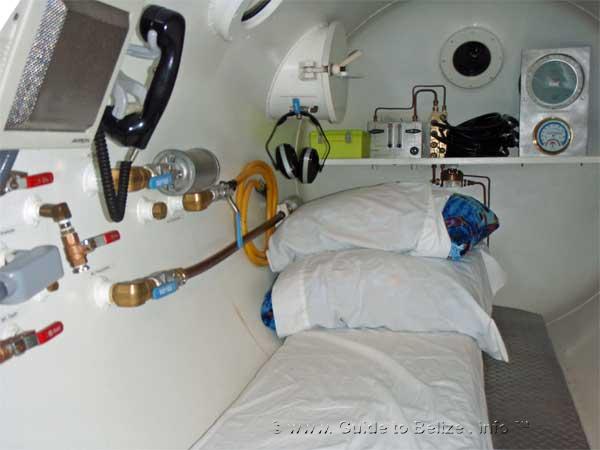
A
decompression chamber is a steel tank that can be pressurized
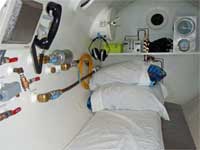
Throughout
treatment a specially trained helper stays with the diver in the
chamber.
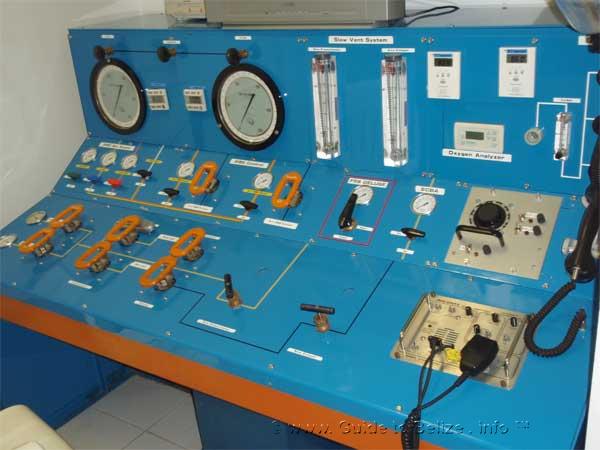
|
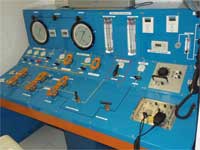
Control
panel for adjusting the
air / gas mix and the dive depth.

|
At
the of the treatment, the chamber will have the air pressure in the
chamber and
outside will be equal and the patient will breath normal air.
After treatment
At the End of the treatment, the diver will be kept for 24 hours for
observation in case his condition deteriorates. In most instances one
course of treatment is adequate, but occasionally several treatments
may be needed. After
every Hyperbaric Treatment, the patient should drink plenty of fluids,
avoid
hot showers or baths, non-prescribed medications, caffeine, carbonated
beverages, alcohol, strenuous exercise, oily spicy foods, avoid
exposure to
higher elevations (more than 1000 ft / 300 m ) or fly until 72 hours
after the last
treatment or cleared by the doctor.
Diving after an accident
After treatment for
decompression sickness, a diver should take a rest from diving. The
length of this rest should be discussed with a specialist in divers'
medicine "Diving Medicine Physician
EDTC".
Chamber Access Program
The
chamber access program is a system whereby the dive shops pay a
membership fee
to become part of the program. After they become members, the dive
shops are
asked to collect a nominal levy or fee (typically $1 USD for each tank
dived) -
and forward to the chamber at the end of every month. This money is
used to pay
for stand-by operating expenses, which include doctors, utilities,
technical
maintenance, upgrades, salaries etc.
This program gives direct access to chamber service at anytime for dive
shops
that are part of the program and are current with their payments. The
contribution however, is not an insurance, the diver will still be
asked to
supply the chamber with all their insurance information. The company
will bill
the insurance carrier of the patient. If patient is lacking any
health/accident
insurance, the chamber shall apply a nominal cost recovery fee.
Never dive without insurance or without joining the chamber access
program
the cost
for the Chamber are 850 US$ a hour and you need to give a deposit of
2'500 US$.
Be sure your dive shop is joining the chamber access program. It's a
good idea to join Divers DAN.
Diving Medicine
Most diving accidents or illnesses are related to the effect of
depth/pressure on gases in the body; examples are decompression
sickness, nitrogen narcosis, oxygen toxicity, arterial gas embolism and
CO2 retention. Dysbaric osteonecrosis is an example of the effects on
the bones and joints of bubbles from decreased pressure in a nitrogen
saturated diver.
Don'ts:
- Don't dive into a submerged pool or into the shallow
end of a pool. Nine of ten diving injuries occur in six feet of
water or less.
- Don't dive off the side of a diving board--dive
straight ahead
- Don't dive from the edge across the narrow part of a
pool without having at least 25 feet of clear dive path in front of you.
- Don't run and dive. That can give you the same
impact as a dive from a board
- Don't do a backdive
- Don't try fancy dives or dives with straight vertical
entry
- Don't dive at or through objects such as inner tubes
- Don't put diving equipment on a pool that wasn't
designed for it.
- Don't dive from retaining walls, ladders, slides, or
other pool equipment.
- Don't dive into unfamiliar bodies of water.
Remember, 3 of 4 diving accidents happen in natural bodies of water
like lakes and rivers.
- Don't swim and dive alone
- Don't drink and drive. The slowing effects of
alcohol or drugs on reaction time can be extremely dangerous in diving.
Decompression Sickness (DCS)
The label 'decompression
sickness' (DCS) was introduced in place of
"Caisson disease". Decompression sickness can be classified as either
Type 1 or Type 2. The different classification reflects the effect, and
therefore the severity, of the condition. Diagnosing DCS as one (or
both) of just two categories does not enable proper identification or
discrimination. However, for the sake of completeness, the two types
are described here.
Type 1 DCS can
occur when
bubbles affect the tissues around skeletal joints. Symptoms usually
include unilateral (on one side of the body) discomfort or pain in one
or more joints. The areas most often affected are the knees, elbows and
shoulders.
Decompression sickness might also present as a skin (cutaneous)
disorder. Nitrogen bubbles can cause mottling, lumps or a rash. "Skin
bends", as they are colloquially termed, are more common during
hyperbaric chamber 'dives' and when diving using a dry suit. Although
not usually in themselves serious, skin symptoms may indicate the
presence of problems elsewhere. A particularly serious cutaneous sign
of DCS is 'cutis marmorata' marbling, in which an area of skin becomes
pale with dark mottling. This is associated with considerable
development of inert gas bubbles within the body.
If left untreated, Type 1 DCS may progress to Type 2.
Type 2
decompression sickness reflects involvement of the Central
Nervous System (CNS) and / or the cardio-respiratory system. More than
half of those diagnosed with DCS will be classified as Type 2.Cerebral
symptoms arise from interruption of the blood supply to the main part
of the brain, and include confusion, reduced mental function and
unconsciousness. Involvement of the cerebellum may lead to tremors,
loss of balance ("staggers") and a lack of co-ordination (ataxia).
Balance may also be affected by damage to the vestibular part of the
inner ear.
Spinal DCS may present as back pain, paresthesia (pins and needles),
paralysis and loss of urinary sphincter control - resulting in either
incontinence or retention.
As discussed already, the formation of small inert gas bubbles does not
necessarily lead to the development of DCS. Likewise, when bubbles
become trapped in the tiny blood vessels around the lungs' alveoli (air
sacs), problems do not always arise. In fact, it is thought that their
accumulation in this area may increase the rate that the gas is
excreted from the body (Edmonds et al, 1993). However, if too many
bubbles collect, breathing will become adversely affected ("chokes").
Symptoms include breathlessness, tachypnoea (increase in breathing
rate), chest pain and coughing. Although symptoms may resolve, this
should be regarded as a life-threatening condition as it may progress
to fatal respiratory collapse.
Foramen Ovale
PFO
(Patent foramen ovale) is a
persistent opening
in the wall of the heart which did not close completely after birth
(opening
required before birth for transfer of oxygenated blood via the
umbilical
cord).
|
 |
This opening can cause a shunt of blood from right to
left , but
more often there is a movement of blood from the left side of the heart
(high pressure) to the right side of the heart (low pressure).
People with shunts are less likely to develop fainting
or low
blood
pressure with diving than are obstructive valve lesions (such as mitral
valve stenosis or aortic stenosis), but are more likely to develop
fluid
accumulation in the lungs from heart failure and severe shortness of
breath
from the effects of combined exercise and water immersion.
Ordinarily, the left to right shunt will cause no
problem; the
right
to left shunt, if large enough, will cause low arterial O2 tension
(hypoxia)
and severely limited exercise capacity. In divers there is the risk of
paradoxical
embolism of gas bubbles (passage of bubbles into
the arterial
circulation) which occur in just about all divers in the venous
circulation
during decompression.
Blood can flow in both directions with Intra-atrial
shunts at
various
phases of the cardiac cycle and some experts feel that a large atrial
septal
defect (PFO) is a contra-indication to diving. In addition, a Valsalva
maneuver, used by most divers to equalize their ears during
descents
and ascents, can increase venous atrial pressure to the point that it
forces
blood containing bubbles across the PFO into the arterial circulation.
Thus
the usual filtering process of the lungs is by-passed.
Nitrogen narcosis
Nitrogen narcosis is a
dangerous condition that can affect scuba
divers, especially when diving deeper than 30 meters. The exact
mechanisms behind nitrogen narcosis are still to be explored, but it
has to do with nitrogen gas affecting the nerve transmissions in the
body during high pressure. Since the air inhaled by scuba divers
contains a
large amount of nitrogen (just like the air that we breathe above the
surface every day), nitrogen narcosis was the first type of gas
narcosis experienced by scuba divers, hence the name. The effects of
nitrogen narcosis are similar to the effects of anesthetic gas or
alcohol. It can be hard for the effected diver to realize that he or
she is
developing nitrogen narcosis, since the level of intoxication will
increase gradually. If you suspect that you or your buddy is suffering
from nitrogen
narcosis, you should immediately begin your ascent to shallower depts.
The effects of nitrogen narcosis will usually
wear of as soon as you reach shallower depths, even if they are far
from the surface.
Swimmer's Ear
The most common symptom of outer ear inflammation or infection, known
as swimmer’s ear or otitis externa, is discomfort/pain that may worsen
with pulling on the ear. Occasionally, outer ear infections can be
caused by a fungal infection. The fungal infection usually occurs on
top of an existing bacterial infection,
often after antibiotic treatment kills off some of the bacteria, which
makes it easier for the fungi to grow. Ear infections can also be
caused by fungi alone, especially in moist, warm climates. .
Treatment of swimmer's ear
Swimmer's ear, when properly treated by a physician, usually clears up
within seven to 10 days. Antiseptic or antibiotic ear drops
should be the front-line treatment
for people suffering from swimmer's ear, while restraint should be
exercised in using oral antibiotics.
Preventing Swimmer's Ear
Prevention and treatment of dive-related earache depends upon whether
the cause is in the external auditory canal or middle ear space.
When the problem is within the external ear canal, preventative steps
include the application of drops that protect ear tissue and inhibit
the growth of harmful microorganisms.
Recipe for Homemade
Swimmer's Ear Drops:
- 1 Bottle (I used a condiment bottle purchased in the
WalMart kitchen aisle for 97¢)
- Label bottle with handy dandy label maker (optional)
- Place equal parts vinegar & rubbing alcohol in
bottle
- Give bottle a little shake & turn yourself about
(again, turning is optional)
- Place a couple drops in each ear after swimming
- That's it - easy peasy!
Jellyfish
Jellyfish-related deaths are rare, but the sting they
inflict is extremely painful. Most known deaths from
jellyfish are attributed to the man-of-war. Other jellyfish can inflict
very painful stings as well. Avoid the long tentacles of any jellyfish,
even those washed up on the beach and apparently dead
Portugese
man on war
Although it
resembles a jellyfish, the Portuguese man-of-war is
actually a colony of sea animals. Mainly found in tropical regions, the
Gulf stream current can carry it as far as Europe. It is also found as
far south as Australia.
The Portuguese man-of-war resembles a
large pink or purple balloon floating on the sea. The floating portion
of the man-of-war may be
as small as 15 centimeters, but the tentacles can reach 12 meters in
length. The huge tentacles
are actually colonies of stinging cells. These tentacles inflict a
painful and incapacitating sting, but
the sting is rarely fatal. |


|
To
get more Information about dangerous creatures on Land and in the Sea,
please
visit our Dangerous
Creatures Page wit a lot of useful information.
|
 |
|
"...The only emergency chamber is
Located in
San Pedro."